
What Is Portable Swim Instruction? A Parent's Guide
- superheroswim
- Jun 29
- 8 min read

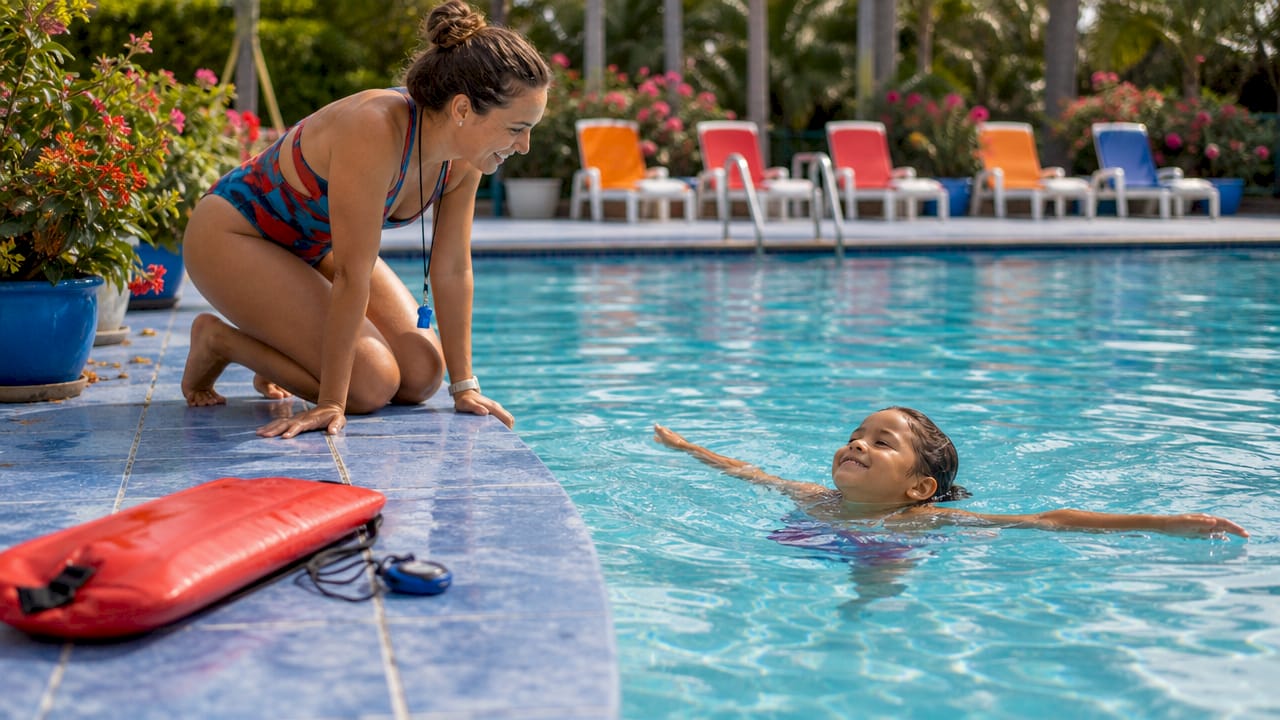
Portable swim instruction is the delivery of personalized swim lessons at your own backyard or community pool, with a focus on water safety and survival skills. The industry term for this model is mobile swim instruction, and it covers everything from one-on-one sessions for infants as young as 6 months to small sibling group lessons for toddlers and young children. Unlike facility-based programs, mobile swim lessons bring a qualified instructor directly to your pool, removing the commute, the crowds, and the rigid group schedule. Superheroswimacademy has built its entire program around this model, teaching over 2,500 children in Palm Beach and Broward counties using a survival-first curriculum backed by CPR and First Aid certification.
What is portable swim instruction and how does it work?
Portable swim instruction is a teaching model where a certified swim instructor travels to the student’s location and conducts lessons in a familiar, private pool. The American Lifeguard Association recognizes water safety education as a public health priority, and mobile instruction directly supports that goal by meeting children where they live and swim most often. Typical sessions run 25–30 minutes and are designed for children starting at 6 months old, with content scaled to each child’s developmental stage. That short session length is not a limitation. It matches the attention span and physical stamina of young children, making every minute count.
The core focus is survival skills first: floating, breath control, and self-rescue before stroke technique. This ordering matters because most drowning incidents involving young children happen in home pools, not public facilities. Teaching a child to survive in the exact pool they use every day is a fundamentally different goal than teaching them to swim laps.
How portable swim instruction differs from traditional swim lessons
Traditional swim lessons happen on a facility’s schedule, in a facility’s pool, with a group of children at mixed skill levels. Mobile swim lessons flip that model entirely.
Learning environment and pacing
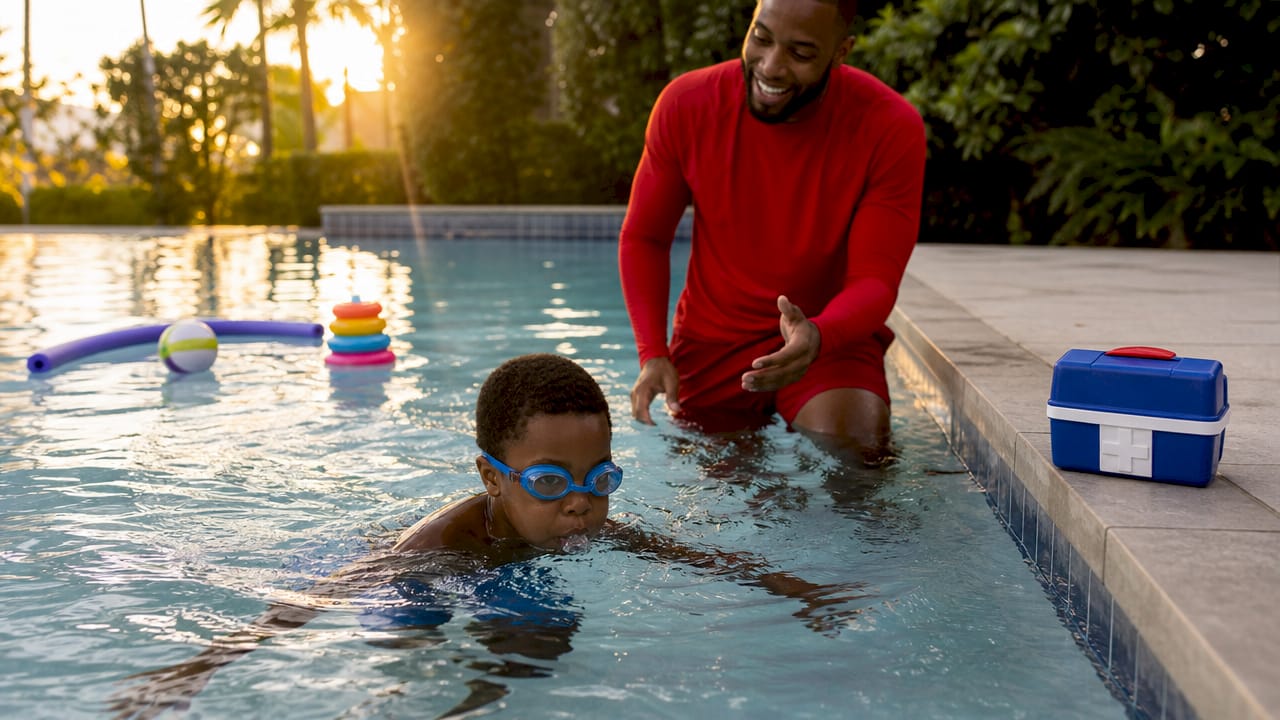
Mobile instructors use a survival-first, student-led pacing approach that high-volume swim schools rarely offer. A child who is nervous about putting their face in the water does not get rushed past that fear because the class needs to move on. The instructor stays at that step until the child is ready. That kind of flexibility is structurally impossible in a group class with eight children and a 45-minute slot.
The home pool environment also changes the safety equation. Teaching in a child’s own backyard pool helps them adapt to the specific layout, depth, and conditions of the water they encounter most. A child who has learned to swim in a generic facility pool may still panic in their own backyard pool if the depth markers, steps, or lighting look different. Environmental training closes that gap.
Time and logistics
Families choosing mobile swim lessons save an average of over 18 hours in preparation and travel across a 10-lesson package. That is the equivalent of more than two full workdays returned to the family. For parents managing work schedules, younger siblings, and after-school activities, that time saving is not trivial.
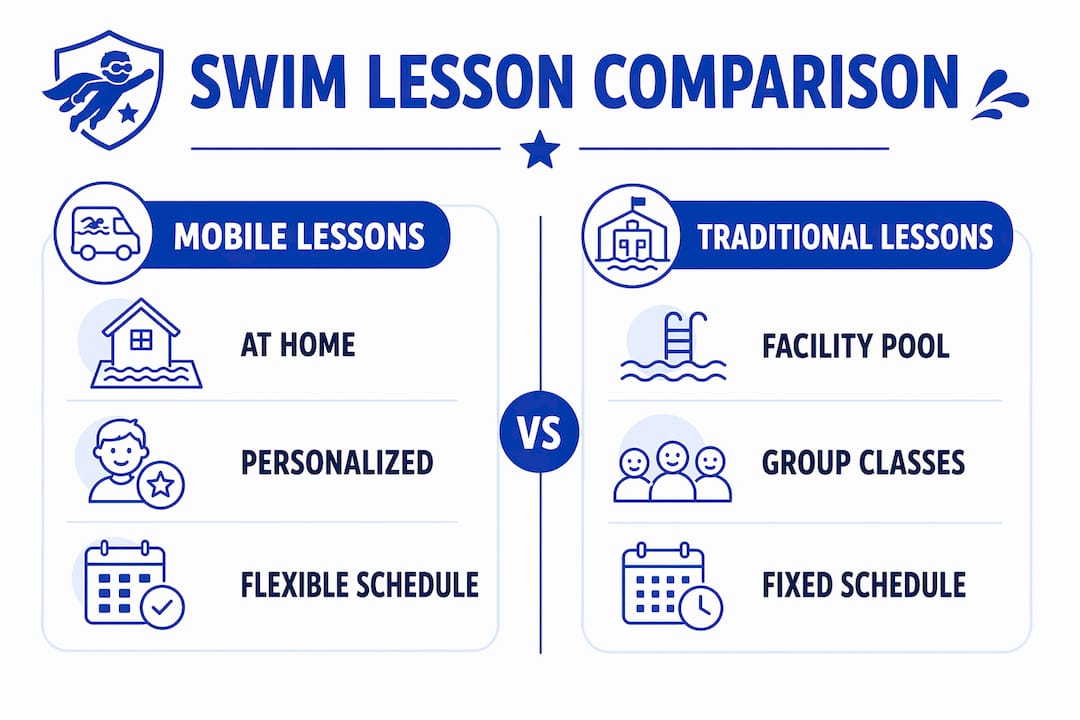
One-on-one and small sibling group formats also increase personalization in ways group classes cannot match. Two siblings at different skill levels each get instruction calibrated to their own needs within the same session, rather than one child being bored and the other being overwhelmed.
Feature | Mobile swim instruction | Facility-based group lessons |
Location | Child’s home or community pool | Commercial or municipal facility |
Session format | One-on-one or small sibling group | Groups of 4–10 children |
Pacing | Student-led, comfort-based | Curriculum-driven, fixed schedule |
Environment training | Specific to child’s actual pool | Generic facility pool |
Commute and logistics | None for the family | Travel, parking, changing rooms |
What to expect during portable swim instruction lessons
A typical mobile swim lesson follows a clear progression. Sessions are short by design, and each one builds directly on the last.
Water familiarization. For the youngest children, the first sessions focus entirely on comfort: entering the water calmly, tolerating water on the face, and learning to trust the instructor.
Breath control and submersion. Children learn to hold their breath, blow bubbles, and control their breathing rhythm before any stroke work begins.
Survival float and back float. Rolling to a back float and holding it is a core survival skill. Instructors prioritize this before teaching freestyle or any other stroke.
Self-rescue and pool exit. Children learn to reach the wall, grab the edge, and climb out. This skill is practiced repeatedly because it is the most likely life-saving action a young child will need.
Stroke development. Once survival skills are solid, instructors introduce basic stroke mechanics, kicking, and arm coordination.
Digital resources and video-based programs now supplement portable swim instruction, giving parents tools to reinforce water safety habits between sessions. The American Lifeguard Association has supported the development of free digital support materials that families can use at home.
Pro Tip: Video the last 5 minutes of each lesson on your phone. Reviewing the footage with your child before the next session reinforces what they learned and builds their confidence going into the water again.
Parents can expect the instructor to communicate progress clearly after each session. Superheroswimacademy provides regular updates and defined goals so parents always know what their child is working toward and what comes next.
Benefits of portable swim instruction for children and families
The advantages of mobile swim coaching go beyond convenience. They affect how quickly children learn and how safe they are in the water.
Reduced pool stress. Mobile lessons eliminate crowded, chaotic pool environments, giving children a calmer setting where they can focus. Less sensory noise means faster emotional regulation and better skill retention.
Faster progress for anxious children. Mobile instruction benefits children with anxiety or sensory sensitivities by placing them in a familiar, lower-stimulus environment. These children often make faster progress than they would in a busy public pool.
Home pool safety training. Teaching in the child’s actual home pool addresses the specific risks of that environment, including pool depth, entry points, and surrounding hazards. Generic facility training does not cover these variables.
Schedule flexibility. Parents book sessions around their own calendar rather than a facility’s fixed class schedule. Morning, afternoon, or weekend slots are all possible depending on the instructor.
Cost-effective grouping. Coordinating lessons with a neighbor or two reduces per-family costs without sacrificing the personalized format.
“Parents often treat swim lessons as a sports milestone. Mobile instruction reframes that entirely. The goal is water safety at home, where the risk is real and immediate.”
For parents of children with age-appropriate swim instruction needs, the portable model removes the barriers that most often cause families to delay or skip lessons altogether.
How to choose and prepare for portable swim instruction
Selecting the right mobile swim instructor requires more than checking availability. The qualifications and preparation steps below determine whether lessons are safe and effective.
What to look for in an instructor
CPR and First Aid certification. This is non-negotiable. Every instructor working with young children in or near water must hold current certification. Superheroswimacademy requires this of every instructor on its team.
Survival swim curriculum training. Look for instructors trained in a structured survival swim program, not just general swim coaching. The teaching sequence matters.
Experience with young children. Working with infants and toddlers requires specific skills in communication, patience, and developmental awareness that differ from coaching older swimmers.
Qualified instructor credentials. Ask directly about their training background, how long they have been teaching, and how they handle a child who is distressed in the water.
Preparing your pool for lessons
Getting your backyard pool ready for instruction is straightforward but worth doing carefully. A well-prepared environment makes lessons safer and more productive.
Remove toys, floats, and distractions from the pool before each session.
Check that pool steps and entry points are clear and accessible.
Confirm water temperature is comfortable for young children (typically 82–86°F).
Have towels, sunscreen, and a dry change of clothes ready poolside.
Review the backyard pool preparation steps your instructor recommends before the first session.
Neighborhood grouping of lessons is a practical strategy that reduces per-family costs and makes scheduling more efficient for the instructor. Coordinating with two or three nearby families to book consecutive sessions at the same pool cuts travel time and often unlocks better rates.
Pro Tip: Ask your instructor to walk the pool area with you before the first lesson. They will spot hazards you may have overlooked, including loose drain covers, slippery decking, or inadequate fencing.
The most common mistake parents make is choosing an instructor based on price alone. Certification, curriculum, and experience with young children are the factors that determine whether your child learns to stay safe in the water.
Key takeaways
Portable swim instruction delivers personalized, survival-first lessons at your own pool, giving children faster skill gains and real-world safety training in the environment they use most.
Point | Details |
Survival skills come first | Mobile instructors teach floating, breath control, and self-rescue before any stroke technique. |
Home pool training is safer | Children learn to handle the specific conditions of their own pool, reducing real-world drowning risk. |
Sessions are short and focused | Lessons run 25–30 minutes, matched to young children’s attention spans and stamina. |
Flexible scheduling saves time | Families save over 18 hours in travel and preparation across a 10-lesson package. |
Instructor credentials matter | CPR certification, survival swim training, and experience with young children are required qualifications. |
What I’ve learned teaching swim lessons at home pools
Most parents come to portable swim instruction thinking it is a convenience upgrade. It is actually a safety upgrade. The difference between a child who can swim in a facility pool and a child who can survive in their own backyard pool is significant. I have watched children who performed beautifully in a structured class freeze up the first time they slipped into a backyard pool with different steps, different depth, and no lane lines. That gap is exactly what mobile instruction closes.
The children who make the fastest progress are almost always the ones who were anxious in group settings. Put them in their own pool with one instructor focused entirely on them, and the fear drops quickly. They start taking risks, trying new skills, and asking to go deeper. That shift happens because the environment feels safe and the pace is theirs to control.
Parents sometimes worry that home lessons are less rigorous than facility programs. The opposite is true. A 25-minute one-on-one session at your pool is more intensive than a 45-minute group class where your child waits their turn. Every minute of a mobile lesson is active instruction.
My strongest advice: do not wait until your child is “old enough” to benefit from lessons. Superheroswimacademy works with children from 6 months old because water safety cannot wait for a developmental milestone. The earlier a child builds comfort and basic survival skills in the water, the safer they are every time they are near a pool.
— SUPERHERO
Portable swim lessons with Superheroswimacademy
Superheroswimacademy brings certified, survival-focused swim instruction directly to your backyard or community pool in Palm Beach and Broward counties.
Every Superheroswimacademy instructor holds CPR and First Aid certification and is trained in the academy’s own survival swim curriculum. With over 2,500 children taught, parents consistently report measurable improvements in water safety and confidence within a short period. Lessons are available for children starting at 6 months old, with one-on-one and sibling group formats to fit your family’s schedule. Check service locations near you and book a session that works for your pool and your calendar.
FAQ
What age can children start portable swim lessons?
Portable swim instruction is available for children as young as 6 months old. Sessions at this age focus on water familiarization, comfort, and basic breath control rather than stroke technique.
How long does a typical mobile swim lesson last?
Most mobile swim lessons run 25–30 minutes. That length is intentional, matching the attention span and physical stamina of infants, toddlers, and young children.
Is portable swim instruction safe for backyard pools?
Portable swim instruction is designed specifically for backyard pools. Instructors train children in the exact pool they use most, which addresses the specific layout, depth, and entry points of that environment.
What qualifications should a mobile swim instructor have?
A qualified mobile swim instructor holds current CPR and First Aid certification and is trained in a structured survival swim curriculum. Experience working with infants and toddlers is also a required qualification, not an optional bonus.
Can siblings take portable swim lessons together?
Yes. Mobile instructors regularly conduct small sibling group sessions, tailoring instruction to each child’s skill level within the same lesson. This format is more cost-effective than booking separate sessions and keeps scheduling simple for families.
Recommended
Comments